
Confused about choosing a hot wallet or a cold wallet when starting your journey with digital assets? This confusion is completely natural and demands complete clarity on the part of users. Well, cold wallets are always chosen over hot wallets because they are considered to be more secure. These wallets are meant for individuals who are planning to trade large amount of assets. If you wish to know some comprehensive details about cold wallets, this article is just for you.
What is a cold wallet?
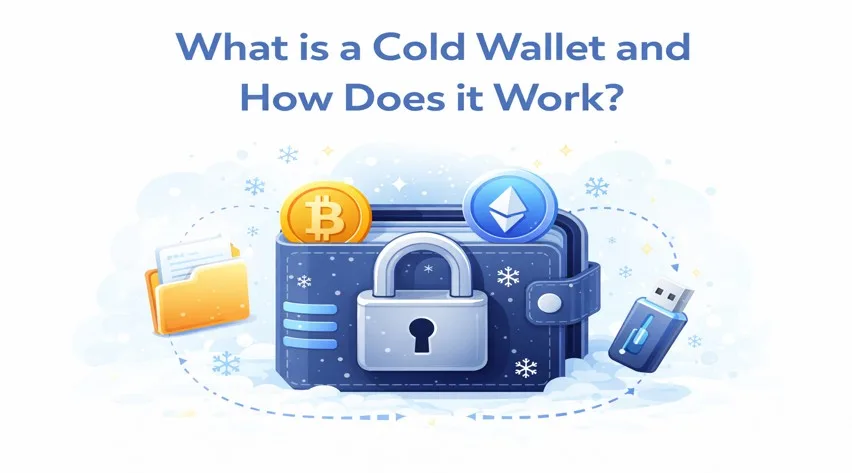
A cold wallet is also known as an “offline storage” or “cold storage.” This is a type of cryptocurrency wallet that stays completely disconnected from the internet world. This gives users complete control over their private keys and keeps the keys separate from the world of the web. This separation from the internet world makes it one of the strongest storage systems that we have today. Cold wallets are meant to protect your private keys or the secret codes that prove your ownership of crypto. There are various types of cold wallets you can choose from, and we’ll discuss them in the coming sections.
How does a cold storage work?
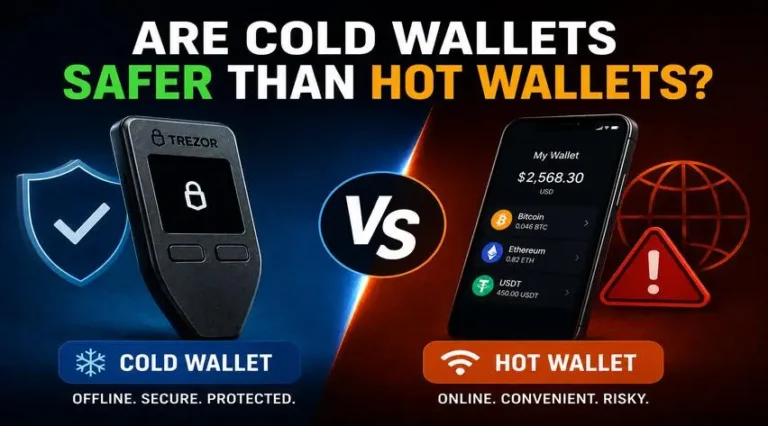
When you store your private keys on a hot wallet, they are vulnerable to theft because all the transactions are transferred through an online server. This connectivity to the world of the web makes it easier for hackers to easily gain access to your digital assets. On the other hand, cold storage reduces the chances of your private keys being exposed to the internet.Such storage systems remove your presence from the online environment. Hence, we can conclude that cold storages are far better than hot storage.
Types of cold wallets you can choose from
There are different types of cold wallets you can choose from and each wallet type comes with distinct features and functions. The different types of wallets are as follows:
- Hardware wallets
- Offline software wallets
- Paper wallets, and
- Metal wallets
Understanding each cold wallet type one by one
-
Hardware wallets
Hardware wallets are physical devices used to store cryptocurrency private keys offline, making them a popular and secure cold storage option. They connect to a computer or smartphone through USB or Bluetooth and work with a companion app to complete blockchain transactions safely. Users sign transactions through the device, so private keys are never exposed online. Many hardware wallets include screens and buttons to confirm transactions directly. Some also use QR codes for safer connections. During setup, the device creates a recovery phrase that helps restore access if the wallet is lost or damaged. PIN codes and encryption also protect the wallet from unauthorized access or hacking attempts.
-
Offline software wallets
Offline software wallets, also called air-gapped wallets, are programs installed on computers that never connect to the internet, making them very secure. They require technical knowledge and are recommended for advanced users. Transactions are created online, transferred to the offline computer to sign, then moved back online to broadcast to the blockchain. While secure, this process is slow and inconvenient for frequent use.
-
Paper wallets
Paper wallets are a simple way to store cryptocurrency offline using a printed or written private key, often with a QR code. The key is generated offline and kept on paper. However, paper wallets are risky because they can be lost, stolen, or damaged. They also have no recovery option. To use the funds, the key must be imported into a software wallet, exposing it to online risks.
-
Metal wallets
Metal wallets, also called metal backups, store a crypto private key or seed phrase engraved on a metal plate or tiles. They are more durable than paper wallets and resist fire, water, and damage. The key should be generated offline for security. However, metal wallets usually only store recovery phrases and do not sign transactions or connect directly to the blockchain.
To sum up:
To sum everything up, cold storages are the ideal way to enjoy comprehensive security and provide your crypto the much-needed protection from hackers. A cold storage manages to keep your assets completely offline, away from any kind of threats. As stated in the article, there are different cold storage types you can choose from, including offline software wallets, paper wallets, and metal backups. However, this completely depends on the needs of the user, which wallet type he wishes to go ahead with.