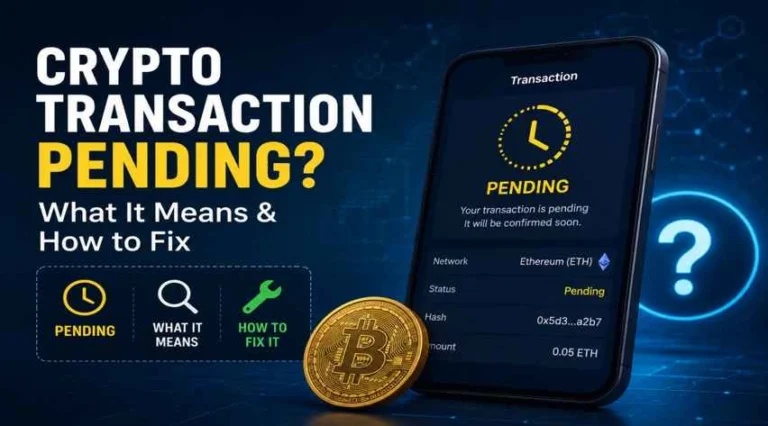

While sending crypto, your transaction could take unexpected turns and might shock you by charging a high transaction cost. Well, this might happen with anyone who does not have any prior knowledge about the gas fee or gas cost. Well, “gas fees” are the charges that you need to pay for processing your transactions on the blockchain. The gas fee can spike unexpectedly, especially in cases when the blockchain is busy.
If you are able to figure out why gas fees get high, you will be able to manage the transactions and save money. In this guide, we shall discuss all the comprehensive details that you must know about gas fees, how it works, and what causes an increase in them during the transaction, along with the ways to reduce the gas fee.
What are gas fees in crypto, and how do they work?
Gas fees: It is a payment or the charges that you need to pay to the validators or miners so that they can process your transaction and secure the network. Since validators/miners are the ones that use computing power to verify and add your transaction to the blockchain, they must be compensated for this.
The gas fee is usually measured in gwei, which is a small fraction of the coin you are transferring. The total gas fee depends on the following factors:
- Gas limit (this usually depends on how complex your transaction is)
- Gas price (this is the price that willingly pay per unit)
Note: If you carry out more complex actions such as interacting with smart contracts or transact NFTs, the gas fee would be high.
What causes high gas fees in crypto?
Gas fees are not constant in nature. They usually fluctuate based on the current network conditions and demand. The reasons that may spike the gas fees are as follows:
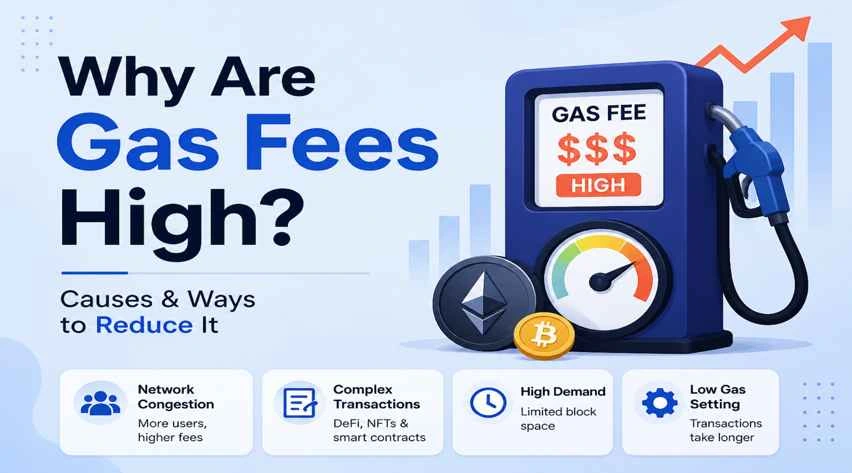
- Network congestion: A spike in the gas fee is usually due to this reason when multiple users try to transact crypto at the same time on the same network. In this scenario, users try to compete by paying higher gas fees so that their transaction is prioritized.
- Popular events: This is another factor if you’re still wondering gas fees high why. Popular events such as DeFi activity token launches and NFT drops can lead to a sudden gas fee surge.
- Complex transactions: Interaction on smart contracts such as staking, swapping, and minting NFTs often require more computational resources which leads to an increase in gas fees.
- Limited block space: It is important to note that each block holds a limited number of transactions. With the increase in demand as compared to the capacity, the fee usually rises.
- Market volatility: When the price fluctuates, a larger number of traders enter the market. This leads to an increase in the transaction volume as well as gas fees.
How to avoid high gas fees in crypto transactions?
While you are not the one who is in control of the network demand, you can still choose to pay less with smarter tools and timings. Here are some easy tricks and techniques you can take into account:
- You must carry out the transaction during off-peak hours, i.e., late nights or weekends.
- Try using layer-2 solutions such as Arbitrum or Polygon.
- Make sure that you set a custom gas fee instead of going ahead with the default suggestions.
- If possible, you may try batching transactions.
- Moreover, you may use gas trackers before sending funds.
- By inculcating these simple habits, you can significantly cut costs or reduce gas fees.
How to reduce gas fees on MetaMask?
In case you are using MetaMask, you might want to learn some easy techniques that could help you in controlling the gas fees the way you want. Here’s what you can specifically do on MetaMask:
- Before you confirm a transaction, choose a “Low” or “Custom” option for gas settings.
- Additionally, you can customize the gas fees manually based on the current network conditions.
- There are some advanced settings on MetaMask that allow you to fine tune the gas limits.
- Moreover, you may switch networks to a cheaper one. E.g., from MetaMask to Binance Smart Chain.
However, it is important to note that setting the gas fee too low can lead to an unexpected delay in transactions or it may eventually fail.
Cheapest ways to transfer crypto without high fees
If you simply wish to move funds and are not in any kind of hurry, following these cost-effective methods can help you get along easily:
- You can try using blockchains at a low cost.
- Try converting your assets on a temporary basis to coins that charge cheaper transfer fees.
- You may also leverage exchanges’ internal transfers, which are usually free between users.
- Besides that, you may also try using stablecoins on the cheaper networks.
What are some of the cheapest blockchains for low gas fees in 2026?
It is important to note that some blockchains usually offer significantly low fees. Some of the popular options for the same are:
- Solana
- Polygon
- Avalanche
- Tron
- Binance Smart Chain
Final words:
High gas fees are usually the result of high blockchain demand and limited capacity paired with user competition. Besides that, there are some networks, such as Ethereum, which are often high in demand, leading to increased gas fees. However, you can take some steps to significantly reduce the cost. This involves choosing the right time to process the transaction, the right network, and adjusting the wallet settings accordingly.