
As the adoption of cryptocurrency is growing multi-fold, so should be the security quotient of the assets you own. The rising crypto adoption gives cybercriminals more opportunities to hack your assets. However, the main question is, “Where should you store your crypto assets?” Should you go with a cold wallet or a hot wallet? Let’s find which of the two is better.
What are cold and hot wallets?
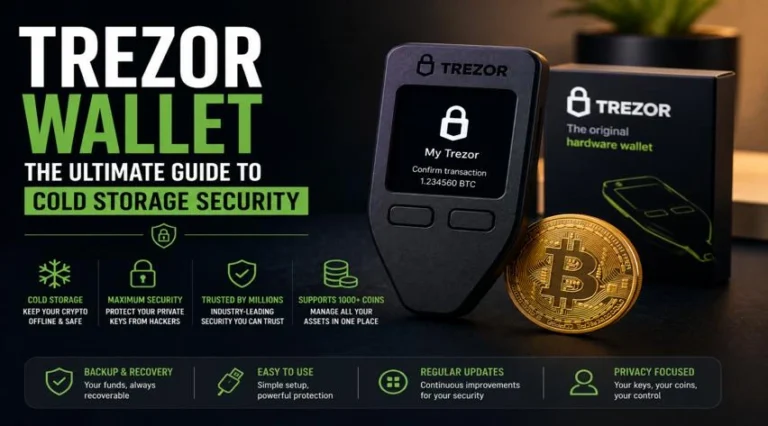
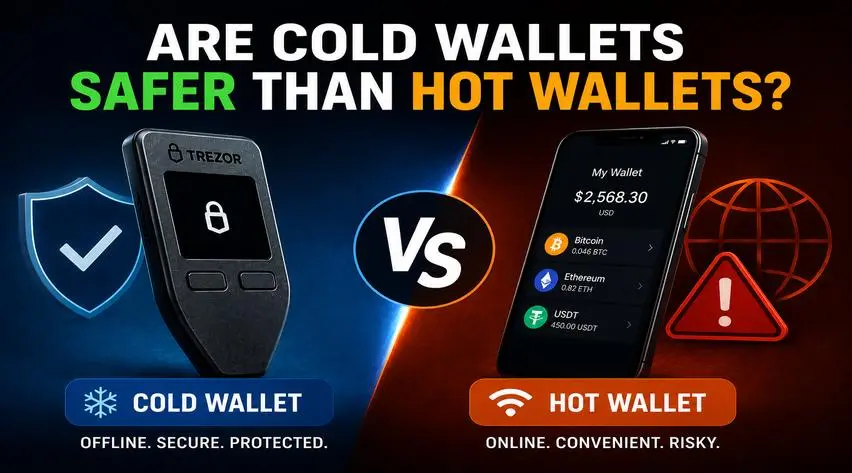
A “cold wallet” is a crypto wallet that is meant to stay offline and ensure that your assets are highly safe. In short, your wallet stores your private keys on a device that is not connected to the internet. This, in turn, makes your crypto less vulnerable to attacks. Some popular examples of the wallet include hardware wallets such as the Trezor Wallet.
On the flipside, a “hot wallet” is usually connected to the internet. These usually include mobile apps, desktop wallets, browser-based extensions, etc. Moreover, hot wallets are designed to be highly convenient and are meant to give you quick access to your assets. However, the security risk attached to this wallet is pretty higher.
Why are cold wallets considered more secure?
Cold wallets are generally considered safer than hot wallets for several reasons. Besides offering strong security features, this wallet comes with the following features:
-
Offline protection
Since these wallets are not connected to the web in any manner, they are highly immune to several online threats, such as malware attacks and hacking.
-
Private key isolation
When you use a cold wallet, your private keys never leave your device. Even if your device gets infected with a virus, your crypto still remains safe.
-
Transaction verification
To transfer funds from a cold wallet, physically confirming each transaction is important. This adds an extra layer of protection to your device. This eventually makes cold wallet an ideal option to store crypto on a long-term basis and voluminous assets.
Common risks of using Hot wallets
No matter how convenient hot wallets are, you cannot risk your crypto security just because of convenience. Here are some of the common risks involved with hot wallet usage:
-
Hacking risks
Since these wallets operate online and are connected to the internet, they are highly vulnerable to cyberattacks. Besides that, just in case your device gets compromised, your funds cannot be recovered.
-
Phishing attacks
There are multiple hot wallets available on the web, which makes it difficult for us to find out which wallets are genuine and which are not. If you mistakenly visit a fake website, it can trick users into revealing their private keys as well as their secret recovery phrase.
-
Malware threats
There are different malicious software programs planted on the web that can easily monitor your activity, capture keystrokes, and alter details, leading to financial loss.
Note: Not all hot wallets are highly insecure. Hot wallets from popular names such as MetaMask are secure. Yet, the fear of internet connectivity cannot be neglected.
Key differences between a cold wallet and a hot wallet
Here’s a quick comparison between the two wallets so that you can understand better why a cold wallet is better than a hot wallet.
| Feature | Cold Wallets | Hot Wallets |
| Internet Connection | Offline | Online |
| Security Level | Very High | Moderate |
| Convenience | Lower | High |
| Best Use Case | Long-term storage | Daily transactions |
| Cost | Usually paid (hardware) | Often free |
| Risk of Hacking | Very low | Higher |
Pros and cons of a cold wallet
Pros:
- Comprehensive security due to offline storage.
- An ideal choice for long-term crypto investors (HODLers).
- Enjoy complete protection from online threats.
Cons:
- Requires upfront cost for purchasing a hardware device.
- Not a suitable option for carrying out frequent transactions.
- If you lose the recovery phrase, you may lose your assets permanently.
Pros and cons of a hot wallet
Pros:
- Easy to use.
- Highly accessible.
- Great option for trading, DeFi, and payments.
- Usually free to set up and use.
Cons:
- Higher risk of phishing and hacking incidents.
- The security completely depends on the device and the internet security.
- Hot wallets are not ideal for storing large amounts.
Best strategy: Use both hot and cold wallets together
Yes, there is no compulsion that you just have to choose one wallet. You can simply take up a smart approach, i.e., using a cold wallet and a hot wallet. Put all your crypto that you are not using actively in cold storage. On the other hand, you can use a hot wallet such as MetaMask for carrying out day to day transactions and daily interaction with DeFi apps.
Final words:
So, if you are wondering whether or not cold wallets are safer than hot wallets than the answer is “Yes.” After a comprehensive analysis, we have come to the conclusion that cold wallets are highly secure because they are not connected to the internet. However, you may also consider using a hot wallet for ease of use and processing everyday transactions.